Down-the-Hole Drilling Tools (DTH Tools)

    1. DTH Hammers (Low Air Pressure)
      DTH Hammers (Low Air Pressure)

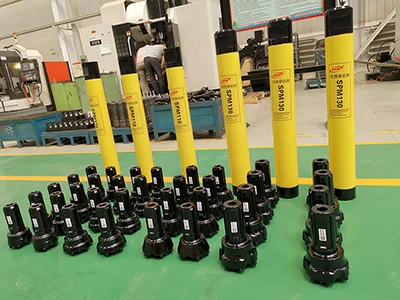
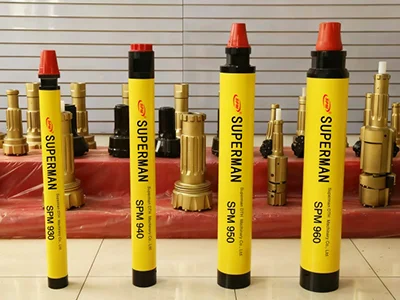
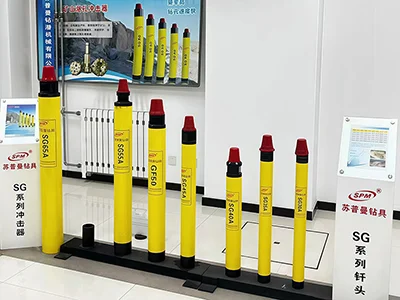
      SPM low air pressure DTH hammers are widely used in geotechnical engineering for drilling various soft to medium-hard rocks and other tough formations that are difficult to drill.

    1. DTH Hammers (Medium Air Pressure)
      DTH Hammers (Medium Air Pressure)

      SPM medium air pressure DTH hammers feature an internal structure designed according to advanced rock drilling theory, ensuring efficient energy transfer, faster drilling speed, and lower air consumption.

    1. DTH Hammers (High Air Pressure)
      DTH Hammers (High Air Pressure)

      The high air pressure DTH hammers feature rapid operation, high impact energy, low air consumption, and long service life. They are widely used in geotechnical engineering for drilling medium-hard to hard rocks and other tough formations that are difficult to drill.

    1. DTH Bits DHD Series
      DTH Bits

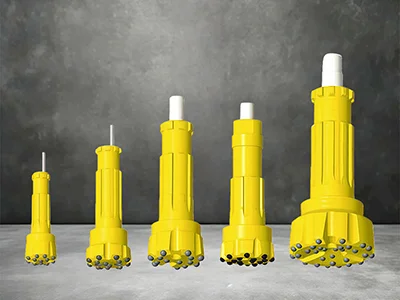
      SPM offers a complete range of DTH bits, precisely tailored for various drilling scenarios. Products feature large front flushing grooves combined with waist-flow designs to accelerate airflow, reduce wear, and enhance durability.
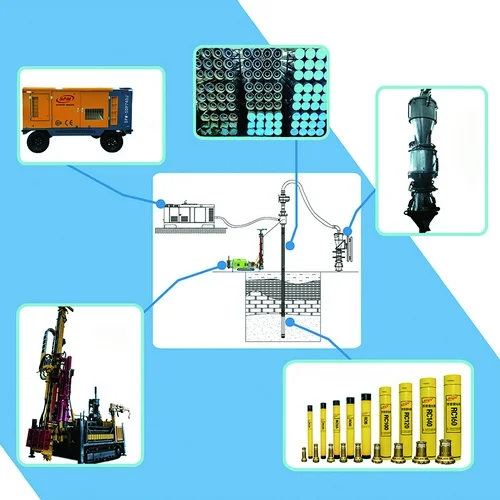
One-Stop Drilling Solution

We are committed to providing efficient and reliable one-stop drilling solutions for clients in the mining, water well, geothermal, oil and gas, hydropower, and transportation infrastructure sectors.

One-Stop Drilling Solution

The low air pressure series (working pressure 0.8-1.5 MPa) is recommended. Soft formations require lower impact energy for effective rock breaking. Low-pressure DTH hammers ensure sufficient penetration efficiency, reduced energy consumption, and slower tool wear. Medium- or high-pressure tools may cause excessive impact, increased cuttings pulverization, and higher risk of hole collapse, resulting in higher overall construction costs.

The large-diameter series is the preferred option. This series is engineered for large-diameter hole making and stable hole formation. Structural features include thicker tool walls for improved torsional strength and wider discharge channels to prevent cuttings blockage. Compatibility with high-torque output from pile-foundation drilling rigs ensures efficient, stable operation. Standard low- or medium-pressure tools may deform under load or suffer from inadequate cuttings discharge.

The medium air pressure series (working pressure 1.5-2.5 MPa) is suitable. Medium-pressure DTH tools deliver proper impact energy for medium-hard rock formations while matching the 1.8-2.2 MPa rig pressure range. Low-pressure tools provide insufficient impact, leading to slow penetration. High-pressure tools exceed the rig’s pressure capacity and cannot achieve normal performance.

Correct bit selection is essential.

  • Limestone (dense, hard rock): Use spherical-button DTH bits, which provide high wear resistance and concentrated impact points for efficient rock breaking.
  • Sand-gravel formations (loose formations with pebbles): Use flat-edge ballistic bits, which offer wider discharge grooves for rapid removal of gravel and reduced bit blockage.

Bit interfaces must match the selected DTH hammer connection standard, for example API REG threads, to ensure stable sealing and power transmission.

A medium air pressure DTH hammers paired with a composite-formation DTH bit such as a spherical-button can meet both layers’ requirements. Medium air pressure tools support efficient drilling in both sand layers and hard-rock layers. DTH bits with wear-resistant ballistic buttons and wide discharge grooves enhance cuttings removal in sand layers and improve rock penetration in hard rock.

When the lower hard-rock compressive strength exceeds 30 MPa, only the DTH hammer may be replaced with a high-pressure model while other components remain unchanged, reducing replacement cost.

The medium air pressure tools series is recommended, as the typical pressure range of 1.5-2.5 MPa matches most quarry drilling rigs.

The spherical-button DTH bit is suitable because quarry formations usually consist of hard rock requiring high wear resistance and strong impact concentration.

If later formation confirmation indicates soft formations such as tuff, low-pressure tools provide lower energy consumption. If the formation is extremely hard such as basalt, high-pressure tools may be applied. Medium-pressure tools function as a reliable universal choice that minimizes selection errors during early stages.