Drilling Rigs
Covers water well and reverse circulation drilling rigs, supporting drilling depths up to 2000 meters. Reliable performance and adaptable to diverse project conditions.
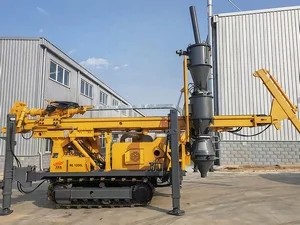
Water well drilling rigs are multifunctional hydraulic drilling units, which are widely used for drilling water wells, monitoring wells, dewatering wells, rescue wells, geothermal air-conditioning holes, as well as for coalbed methane, natural gas, petroleum extraction, and other engineering applications.
-
- Drilling diameter: 105-305mm
- Max. drilling depth: 330-370M
- Air pressure: 1.2-3.5Mpa
- Drilling efficiency: 10-35m/h
300 Series (up to 370m depth)
-
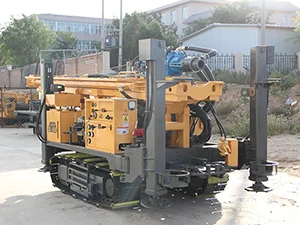
- Drilling diameter: 105-450mm
- Max. drilling depth: 600-650M
- Air pressure: 1.6-6Mpa
- Drilling efficiency: 10-35m/h
600 Series (up to 650m depth)
-
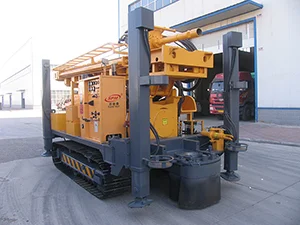
- Drilling diameter: 105-305mm
- Max. drilling depth: 330-370M
- Air pressure: 1.2-3.5Mpa
- Drilling efficiency: 10-35m/h
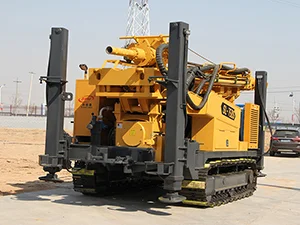
700 Series (up to 750m depth)
-
- Drilling diameter: 105-800mm
- Max. drilling depth: 1000-1050M
- Air pressure: 1.6-8Mpa
- Drilling efficiency: 10-35m/h
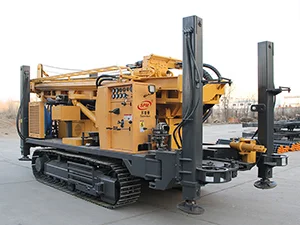
1000 Series (up to 1050m depth)
-
- Drilling diameter: 105-900mm
- Max. drilling depth: 1500M
- Air pressure: 1.65-8Mpa
- Drilling efficiency: 10-35m/h
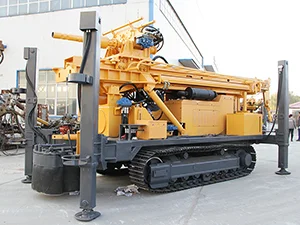
1500 Series (up to 1500m depth)
-
- Drilling diameter: 105-1000mm
- Max. drilling depth: 2000M
- Air pressure: 1.65-8Mpa
- Drilling efficiency: 10-35m/h
2000 Series (up to 2000m depth)
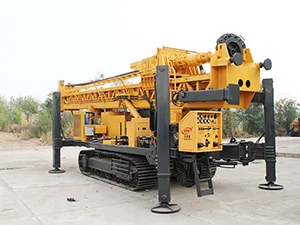
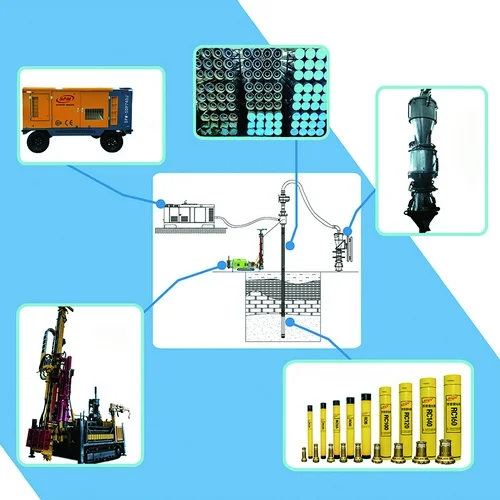
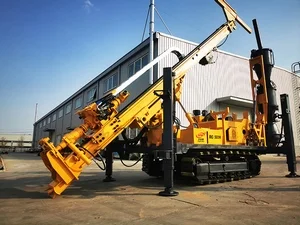
The reverse circulation drilling rig is an efficient, environmentally friendly, and versatile rig mounted on crawler tracks. It uses advanced reverse circulation drilling technology, allowing rock dust to be effectively collected through a dust collector.
-
- Drill hole diameter: Φ105-400mm
- Drilling depth: 400M
- Pressure: 1.2-3.5Mpa
- Gas volume: 16-55m³/min
RC500L (up to 400m depth)
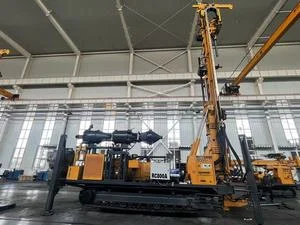
-
- Drill hole diameter: Φ105-550mm
- Drilling depth: 600M
- Pressure: 1.6-8Mpa
- Gas volume: 16-96m³/min
RC800L (up to 600m depth)
-
- Drill hole diameter: Φ105-800mm
- Drilling depth: 1000M
- Pressure: 1.6-8Mpa
- Gas volume: 16-96m³/min
RC1200L (up to 1000m depth)